
There is a hill in the far north of South Africa where three countries meet, where a golden rhino smaller than your hand was buried for seven centuries, and where the richest kingdom in Southern Africa traded with China long before any European ship rounded the Cape.
Almost nobody visits it.
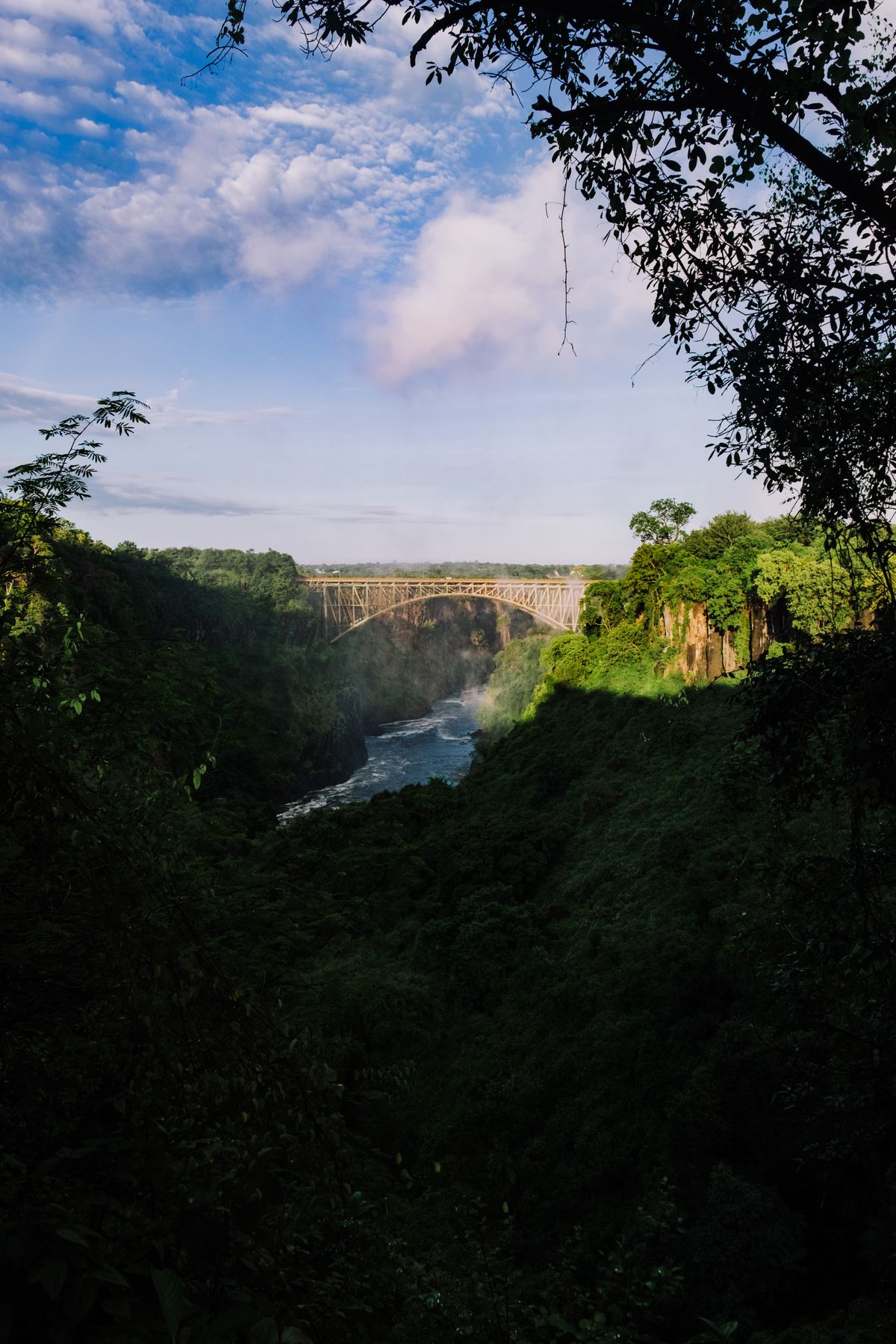
Mapungubwe National Park sits in the Limpopo Valley, pressed into the corner where South Africa, Botswana and Zimbabwe touch. It is a World Heritage Site, a national park, and one of the most quietly extraordinary places on the subcontinent — and it receives a fraction of the visitors that Kruger does, four hours to the south.
A Kingdom That Traded With the World
Between roughly 1075 and 1220 AD, Mapungubwe was the capital of a society of around 5,000 people. Its people worked gold, ivory and copper, and they were plugged into Indian Ocean trade networks that stretched to Persia, India and China. Glass beads from Asia have been excavated on the hilltop. Chinese celadon pottery turned up in the valley.
This was not a scattering of villages. It was a stratified kingdom with a royal elite living on the summit, commoners below, and a sacred leadership that drew its authority from rain-making and ancestry.
Then, around 1300 AD, it emptied. The climate cooled, the trade routes shifted north, and the people moved on to Great Zimbabwe. The hill was abandoned, then forgotten, and its story stayed buried until archaeologists began working the site in the 1930s.
The Golden Rhino and the Royal Hill
The park’s emblem is a small gold foil rhinoceros, found in a royal grave on Mapungubwe Hill in 1932, along with gold beads, bangles and a sceptre. It is now in the Mapungubwe Museum at the University of Pretoria, and a replica sits in the park’s interpretation centre.
You cannot climb the royal hill alone. Access is by guided tour only — a short, steep walk with a ranger who explains the terraces, the grave sites and the archaeology. Book it at reception when you arrive; it is the difference between seeing a hill and understanding a civilisation.
Sandstone, Baobabs and the Confluence
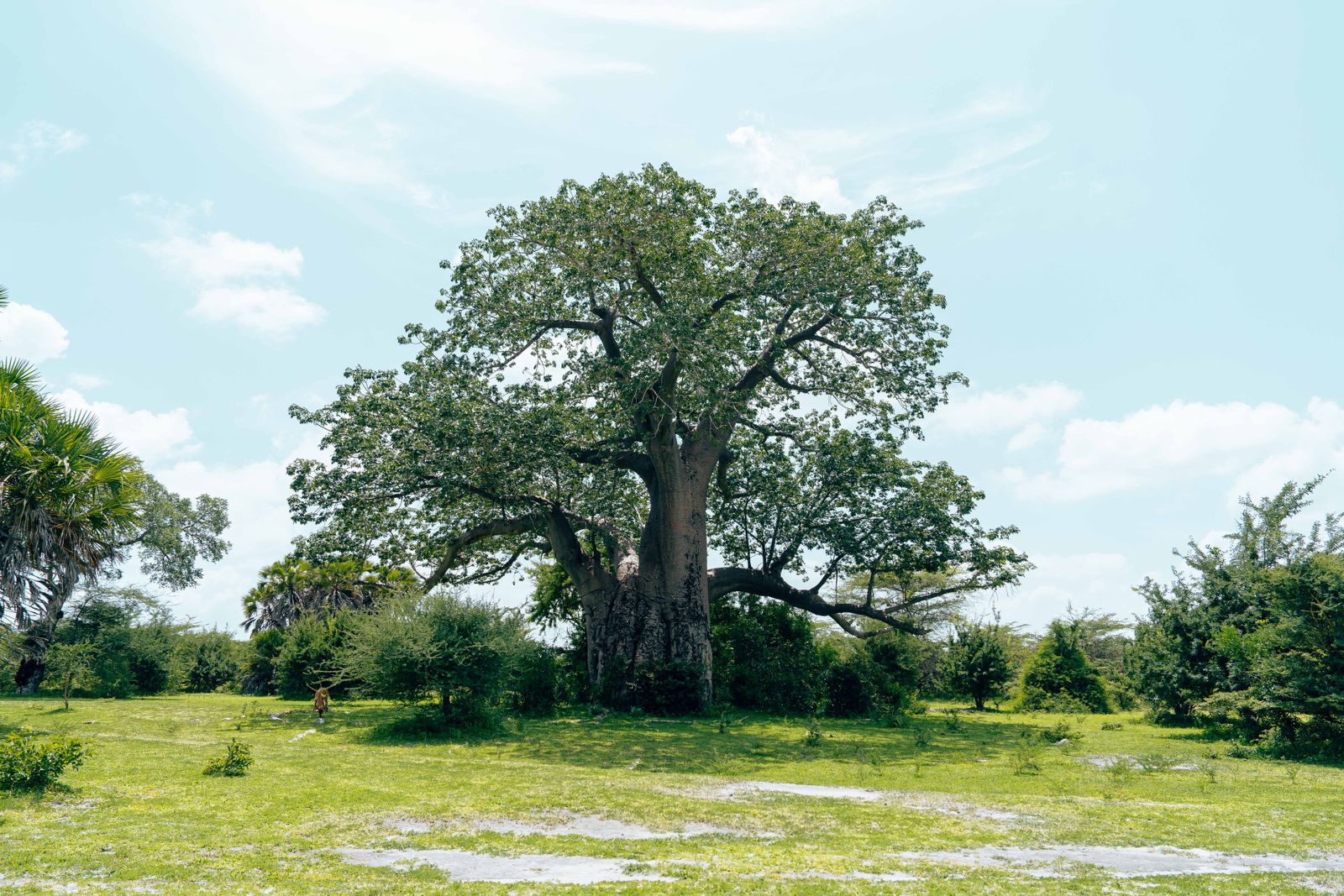
The landscape alone justifies the trip. Mapungubwe is a country of red sandstone outcrops, mopane woodland, fever trees along the Limpopo floodplain, and baobabs standing in the middle of nowhere like the last survivors of another era.
The Confluence Viewsite, at the meeting of the Shashe and Limpopo rivers, looks out over three countries at once. Zimbabwe is to the north, Botswana to the west, and the water below you is the border. Sunset there is the park’s signature moment — bring something to drink and stay until the light goes.
The Wildlife Nobody Expects
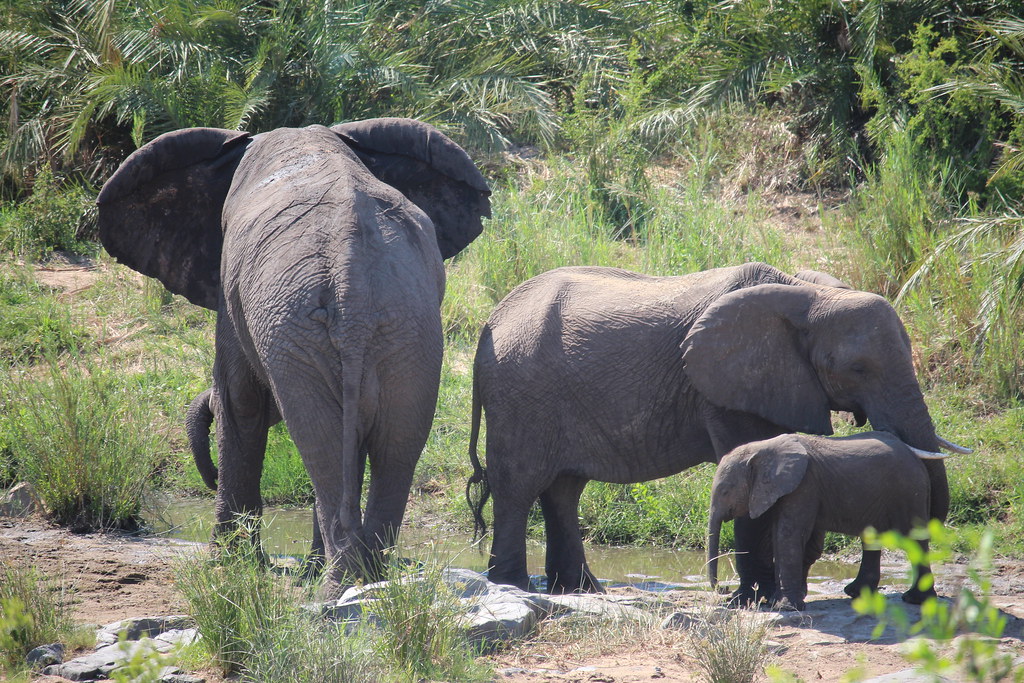
Mapungubwe has elephant, and a lot of them. It also has lion, leopard, spotted hyena, the largest population of eland in South Africa, and over 400 bird species recorded — including spectacular numbers of raptors and, in summer, breeding colonies of southern carmine bee-eaters along the riverbanks.
This is not a Big Five tick-box park. Game is dispersed, the bush is thick, and the rewards come from patience and from the landscape itself. The birding, the trees, the geology and the archaeology are the headline acts here.
How to Do Mapungubwe Properly
Fly into Polokwane, then drive three hours north, or self-drive from Johannesburg in around six hours. A 4×2 handles the main roads; the western section’s 4×4 routes need low range and a sense of humour.
Stay inside the park at Leokwe Camp, a cluster of sandstone-and-thatch cottages tucked into the rock, or at the tented Vhembe Trails Camp. Mazhou is the campsite. Outside the park, lodges around Alldays and Musina fill the gap.
Two nights is the minimum. Three lets you do the heritage tour, the confluence at sunset, a morning birding drive and the western 4×4 loop without rushing.
Why It Stays Empty
Mapungubwe is remote, it has no five-star marketing machine, and it has been the subject of a long-running dispute over coal mining and its buffer zone. It does not appear on the standard seven-day itinerary that runs Johannesburg, Kruger and Cape Town.
That is precisely its value. On a good morning you can stand at the confluence and see nobody. You can walk to a 900-year-old hilltop with a ranger and a handful of other people, in the place where gold first told the world that Southern Africa had something worth trading.
The Kingdom of Gold is still there. It has simply been waiting for people to notice.




The editorial team at Destination Southern Africa brings you the most comprehensive travel intelligence for Southern Africa. With decades of combined experience in African tourism, we cover everything from hidden gems to practical travel tips for international visitors.