
A Culinary Road Trip Through Southern Africa
Southern Africa sells itself on landscapes. But ask anyone who has travelled the region properly and they will tell you the same thing: the food is the story nobody expects. Cape Malay curries slow-cooked in the Bo-Kaap, Karoo lamb off the coals, prawns the size of your hand on a Mozambican beach. This is a part of the world where every culture that passed through left a recipe behind — and the best way to understand it is to eat your way from one end to the other.
Here is a culinary route that takes in the region’s signature dishes, and where to find the genuine article.
Cape Town: Where It All Begins
Start in the Bo-Kaap, the brightly painted Cape Malay quarter above the city bowl. Cape Malay cuisine is the oldest fusion food in South Africa — Malaysian, Indonesian and Dutch influences shaped by three centuries of local kitchens. Book a cooking class or a home-style lunch, and order a denningvleis (a sweet-sour lamb curry) or a fragrant chicken bredie with flaky samoosas on the side. Wash it down with a glass of rooibos, the red bush tea the Cederberg gave the world.
Before you leave the city, try a Gatsby — a fully loaded foot-long sandwich from the Cape Flats that is less a snack than a commitment — and grab a koeksister or a piece of melktert at a bakery. Nobody regrets the detour.
The Winelands: Fine Dining With Mountain Views
Forty minutes east, Stellenbosch and Franschhoek hold their own against food destinations anywhere on earth. Franschhoek’s restaurant row covers everything from French-inflected tasting menus to winery bistros where lunch runs long into the afternoon. The produce is the point: the Winelands grow their own olives, cheeses, stone fruit and, of course, the grapes. A cheese-and-wine pairing on a wine farm terrace is the region’s most reliable afternoon.
The Karoo: Lamb, and Nothing Else Needed
Inland, the semi-desert of the Karoo produces what many South Africans consider the country’s finest lamb — animals that graze on fragrant indigenous shrubs, giving the meat a herby, almost floral flavour you will not find in a supermarket. In towns like Graaff-Reinet and Beaufort West, a simple Karoo lamb chop over the coals, with braaibroodjies (grilled cheese-and-tomato sandwiches) and a bottle of local shiraz, is the whole event. Order it simply; it needs nothing.
The Braai: The Region’s True Religion
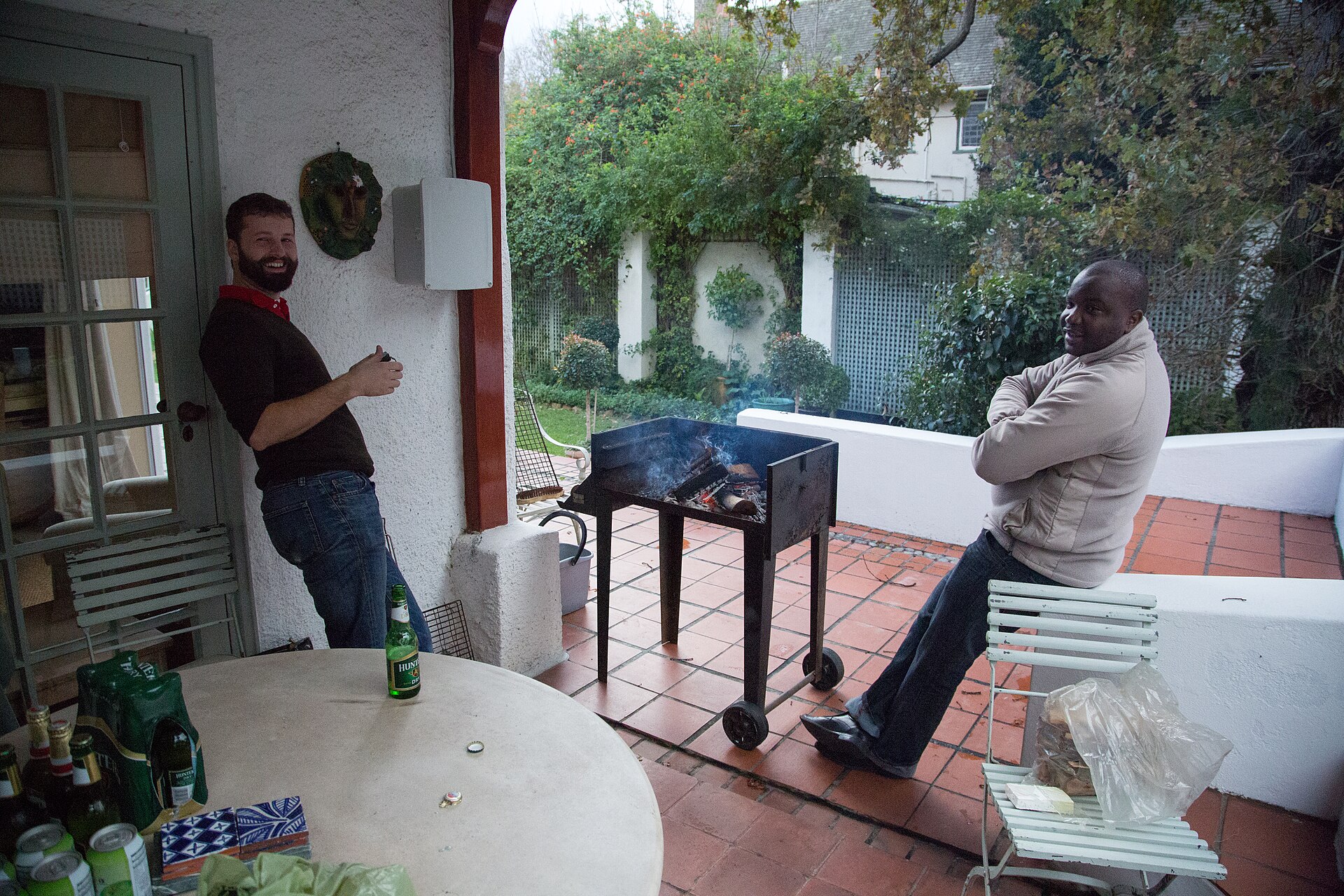
Which brings us to the braai — the wood-fire barbecue that is less a cooking method than a weekly institution. Lamb chops, boerewors, chicken, and whatever the host found at the butcher that morning, cooked slowly over hardwood and served when the fire decides. If you are invited to a braai, go. Do not eat beforehand, do offer to bring something, and do not ask for a gas grill — wood is the point.
The braai is also where you will meet potjiekos: a layered meat-and-vegetable stew slow-cooked for hours in a three-legged cast-iron pot, never stirred. It is the region’s patience, served in a bowl.
Durban and the KZN Coast: The Best Curry Outside India
Up the east coast, Durban is home to one of the largest Indian communities outside India, and the food proves it. A proper Durban bunny chow — a hollowed-out quarter loaf filled with scorching mutton or bean curry — was born here, on the Grey Street pavements. Eat it with your hands, standing up, and drink a cold amasi or a lime soda alongside. The city’s spice markets, fish stews and Durban-style curries alone justify the detour from the N2.
North of the city, the Maputaland coast serves fresh line fish straight off the ski-boats at beachside shacks. Simple, charred and honest.
Mozambique: Fire, Coconut and Prawns
Cross the border and the menu changes. Mozambican food is built on piri-piri, coconut milk and the Indian Ocean’s generosity: matapa (cassava leaves ground with peanuts), grilled garrafa chicken, and the famous prawns — grilled or simmered in a coconut-and-curry sauce, eaten with your hands at a plastic table with sand underfoot. Pair everything with a Tipo Tinto and lime.
Snacks for the Road
Everywhere in between, the region keeps you fed. Biltong and droëwors — air-dried beef and sausage — are the road-trip staples. Roadside stalls sell roasted mealies, and farm stalls in the Overberg and the Midlands serve honest pies and preserves. In Namibia, biltong meets German baking: venison and a streuselkuchen in the same stop.
Practical Tips
Travel for the food the way locals eat. Book Winelands tables ahead, especially on weekends between October and April. Food tours in the Bo-Kaap and Durban are inexpensive and worth it. Ask where locals eat rather than where tourists dine — the answer is almost always cheaper and better. And leave the diet at home: Southern African hospitality measures itself in second helpings.
The Bottom Line
Most visitors come for the wildlife and leave talking about a lamb chop in a dusty Karoo town or prawns on a Mozambican beach. Plan the trip that way from the start. The region’s best table isn’t in a guidebook — it’s the next one you sit down at.
Destination Southern Africa covers the region’s food and wine culture in every issue. Follow along for the next culinary feature.




The editorial team at Destination Southern Africa brings you the most comprehensive travel intelligence for Southern Africa. With decades of combined experience in African tourism, we cover everything from hidden gems to practical travel tips for international visitors.