
Mana Pools: The Walking Safari That Changes How You See Africa
There is a moment on a Mana Pools walking safari that no photograph survives. You are on foot, on the Zambezi floodplain, and a bull elephant stands up on his hind legs to reach the ana tree pods about six metres above your head. He is not performing. He is eating breakfast. And you are close enough to hear the branches crack.
Nobody drives you there. You walk.
Mana Pools National Park sits in the far north of Zimbabwe, on the southern bank of the Zambezi, facing Zambia across the water. It is a UNESCO World Heritage Site, a RAMSAR wetland of international importance, and one of the very few places on the continent where you are allowed to leave the vehicle and move through big-game country on your own two feet. It is also, for most Southern African travellers, completely off the radar. People fly to Victoria Falls, tick off the smoke that thunders, and go home. Mana Pools is 350 kilometres downstream, and it might as well be another planet.
Why Mana Pools Is Different
Most safari destinations are built around the vehicle. You sit, you scan, you photograph, you move on. Mana Pools inverts the whole arrangement. Park rules allow guided walking safaris, and the terrain rewards them: open floodplain, tall Faidherbia albida trees, and riverine bush that gives you sightlines, not walls.
The result is a completely different kind of attention. On foot, your senses come back online. You start noticing alarm calls, spoor, the direction of the wind, the way a herd of impala all turn their heads at the same instant. Your guide reads the bush aloud, and within two days you can read some of it yourself.
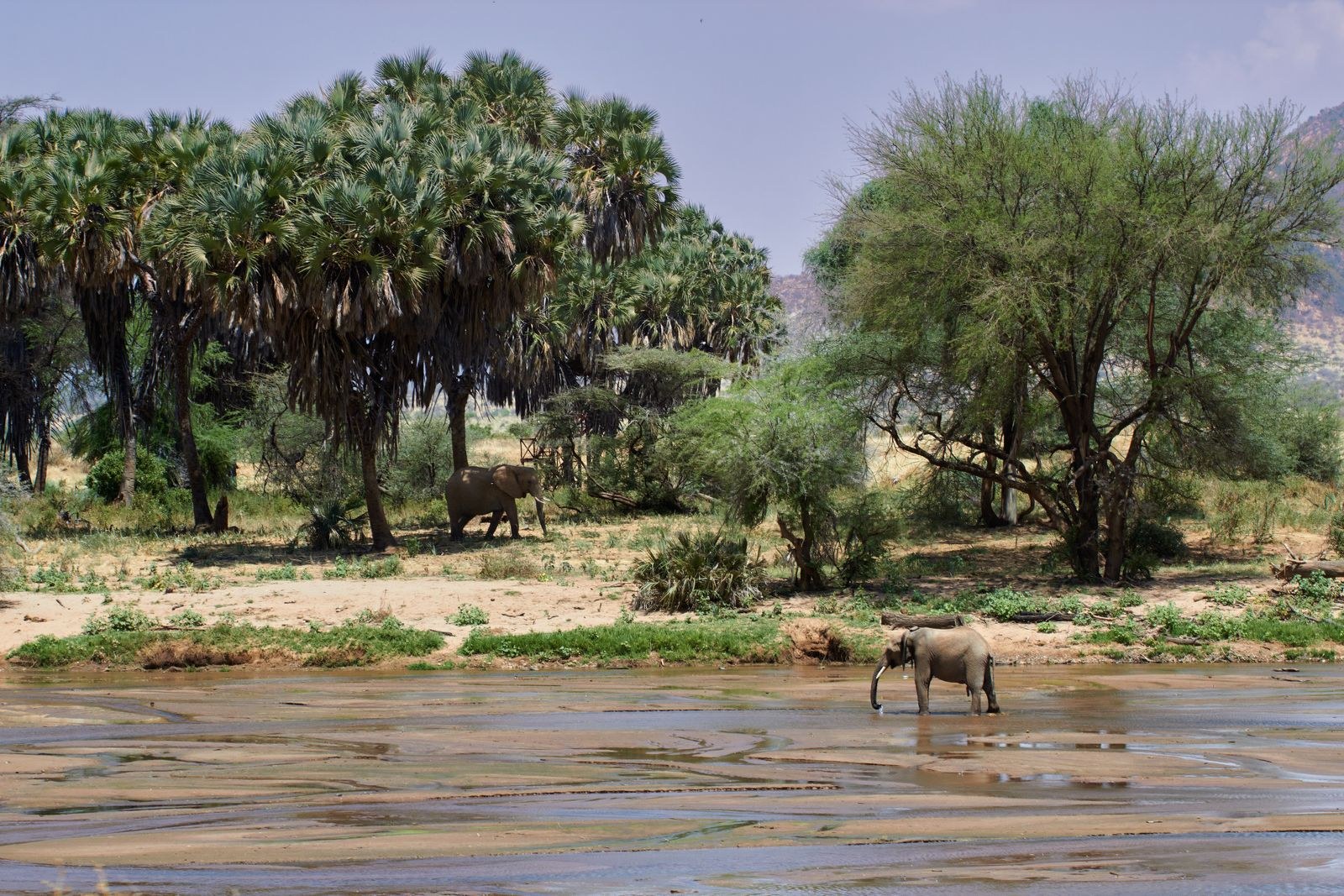
The wildlife is exceptional and unusually relaxed. Mana Pools holds one of the densest populations of elephant in Southern Africa during the dry season, along with buffalo in their thousands, lion, leopard, wild dog, and a healthy population of the continent’s most endangered large carnivore, the African wild dog. The floodplain also supports the highest concentration of hippo and crocodile you will see anywhere along the Zambezi.
The Standing Elephants
Mana Pools is famous for a small number of bull elephants that have learned to stand upright on their hind legs to reach pods high in the ana trees. It is a genuine, observed behaviour, not a marketing story, and it is passed down through the population.
What is worth understanding is why it matters. These are not tame animals. They are simply tolerant, and that tolerance exists because the park has protected them and because walking guides operate with strict protocols. A guide will not approach a bull that is in musth, will keep the group downwind where possible, and will read the moment an elephant’s posture shifts. You are a guest in a working wild landscape, and the etiquette is not optional.
When to Go
The dry season, roughly June to October, is when Mana Pools delivers its signature experience. As the pans inland dry up, animals concentrate along the Zambezi, and the floodplain turns into a stage. September and October are hot and dramatic; October is often the peak for elephant concentrations but can push past 40°C by mid-afternoon. June to August is more comfortable and still excellent.
The wet season, November to April, transforms the park entirely. The bush thickens, the roads become unreliable, and many camps close. This is not the time for a first visit, but it is a magnificent time for birding, with migratory species arriving from the northern hemisphere and the floodplain filling with water.
Getting There
Most visitors fly into Harare or Victoria Falls and connect by light aircraft to one of the park airstrips, typically Mana Main or Chikwenya. Road access exists via Chirundu and Marongora, but the tracks are rough and self-driving in the park is limited. Transfer flights from Victoria Falls take roughly an hour to ninety minutes depending on routing.
Visas for Zimbabwe are straightforward for most nationalities and can be obtained on arrival or in advance. Check current requirements before you book, and confirm your operator handles park fees, which are charged per person per day on top of accommodation.
Where to Stay
Accommodation in and around Mana Pools splits into three tiers.
Private concessions inside the park offer the best walking access and the most comfortable camps, with tents that open onto the floodplain and guides who have worked the area for decades. These are not cheap, and they book out far ahead for the peak dry season.
Self-catering and campsite options at Nyamepi and the surrounding exclusive campsites suit travellers with their own 4×4 and a serious sense of adventure. Facilities are basic. The experience is not.
Operators outside the park on the Zimbabwean and Zambian sides run day and multi-day walking excursions. This is a good middle path if you want the walking experience without the full concession price tag.
What a Walking Safari Actually Costs You
Walking safaris are physically undemanding by hiking standards. You are not climbing. You are moving slowly, stopping often, and standing still a great deal. But the heat is real, and the days start early. Distances are typically three to eight kilometres over two to three hours in the morning, with a shorter walk in the late afternoon if conditions allow.
Practical preparation matters more than fitness:
Boots you have already worn in. Not new ones. Thornveld punishes blisters.
Neutral colours. Avoid black and dark blue, which attract tsetse flies in this region. Khaki, olive and light grey are the standard for good reason.
A wide-brimmed hat and real sun protection. The floodplain has almost no shade.
Binoculars on a harness, not a neck strap. You will use them constantly and they will wear a groove in your neck otherwise.
A camera with a strap, and no expectation of using it constantly. The best moments in Mana are not photographic moments. They are listening moments.
The Honest Caveat
Mana Pools is not a soft-landing first safari. There is no fence, no guaranteed sightings board, and no vehicle to retreat into if an elephant decides your route is inconvenient. You need a guide you trust, a camp that takes safety protocols seriously, and a temperament that can handle being genuinely small in a genuinely large landscape.
If you have done the Kruger self-drive and want more, or if you have been on a dozen game drives and remember none of them, Mana Pools is the correction. Two or three nights on foot here will rebuild how you understand wild animals. You will stop counting species and start noticing behaviour. You will hear a lion at night and know roughly where he is.
Africa has a great many places you can drive through. Mana Pools is one of the few you can walk into, and walk out of, changed. Book the dry season, take the walking concession, leave the itinerary loose, and let the river set the pace.




The editorial team at Destination Southern Africa brings you the most comprehensive travel intelligence for Southern Africa. With decades of combined experience in African tourism, we cover everything from hidden gems to practical travel tips for international visitors.