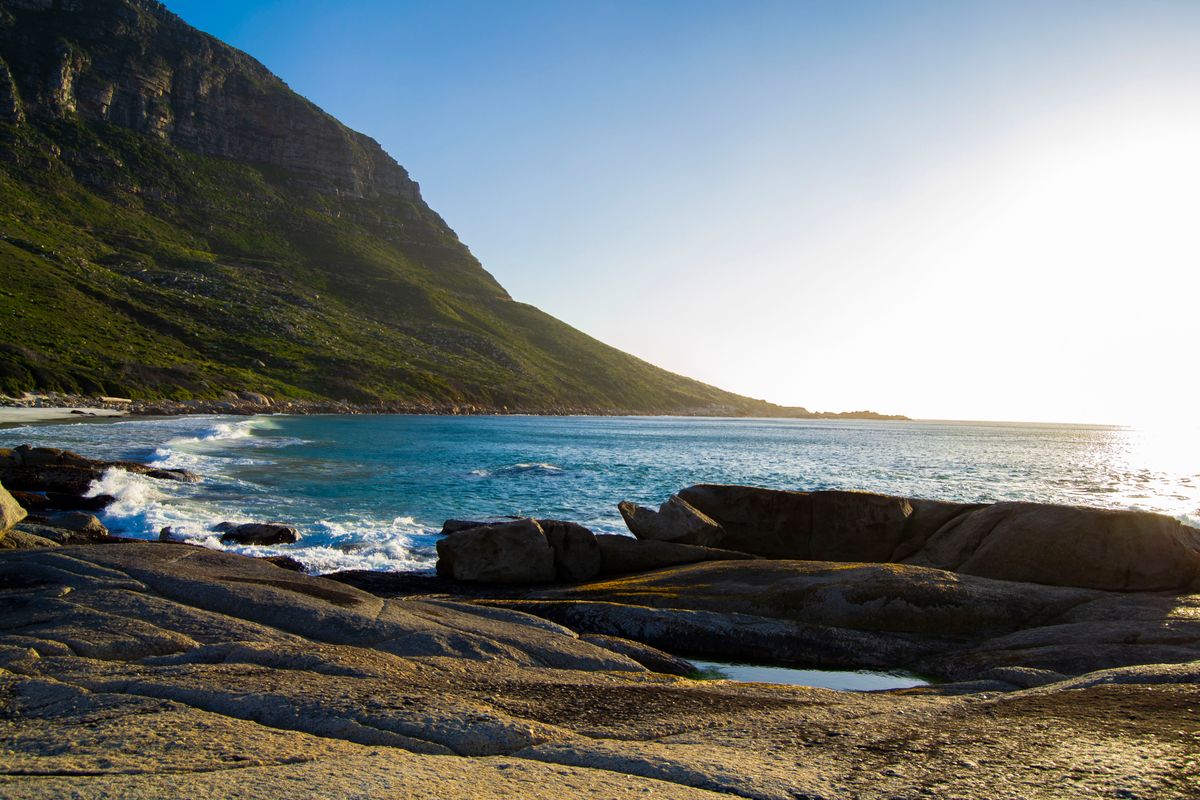

Three hours north of Cape Town, the road runs out of distractions. The vineyards of the Winelands fall behind, the tar flattens, and then the mountains arrive: jagged sandstone peaks the colour of rust and honey, stacked across 71,000 hectares like the skeleton of a world older than the one we live in.
This is the Cederberg Wilderness Area — and it is the detour most Southern Africa itineraries skip. Travellers race past it on the N7 between Cape Town and Namibia, glancing at the rock formations through a windscreen. Big mistake. The Cederberg is not a viewpoint. It is a destination that rewards the people who stop.
Rock Formations That defy Belief
The Cederberg’s sandstone has been sculpted by wind and water for 500 million years, and the results look designed rather than accidental.
The Maltese Cross is the signature: a 20-metre pillar of rock that earned its name from the cross-like shape revealed when you view it from the right angle. It’s a short, family-friendly hike from the Dwarsrivier valley — roughly two hours return — and best photographed in the late afternoon when the sandstone glows like embers.
For the more ambitious, the Wolfberg Arch is the Cederberg’s cathedral. The hike in is a serious full-day effort through the Wolfberg cracks — narrow rock chimneys you climb through, not around — but standing beneath the arch as the sun sets through it is one of the great quiet experiences in South African hiking. Book the permit in advance; daily numbers are limited.
And then there are the cracks themselves: slot-like fissures in the rock that you squeeze through, above and around, on a route that feels engineered by a mischievous geologist.
The Oldest Art Gallery on Earth
The Cederberg holds one of the world’s richest concentrations of San rock art — more than 2,500 known sites, some dating back as far as 8,000 years. The San were the region’s first people, and their legacy lives on in red ochre figures of hunters, eland, and dancing shamans on the rock overhangs.
The Sevilla Trail near Traveller’s Rest Farm strings together a walkable route of rock art sites along the Brandewyn River — roughly 4km of gentle trail past a dozen panels. The Kromrivier and Stadsaal Caves are other accessible highlights, where the paintings sit beneath natural rock amphitheatres.
Go slowly. These are not decorations. They are records of a worldview — trance dances, hunting rituals, and the spiritual relationship between people, animals, and land — made by artists whose names are lost but whose work is still legible millennia later.
Some of the Darkest Skies in Southern Africa
Light pollution is a city problem, and the Cederberg has none of it. On a moonless night the Milky Way is bright enough to walk by, the Magellanic Clouds sit like patches of spilt light, and constellations you’ve only seen in books are overhead in brutal clarity.
The region’s altitude, dry air, and distance from any major town make it a genuine stargazing destination — the kind that brings astronomers from Europe not because of telescopes, but because of the sky itself. Several farms and reserves in the area now offer stargazing decks and guided astronomy evenings.
Plan around the moon. New moon weekends are transformative; full moon will wash out all but the brightest stars.
Hiking Routes for Every Level
- Easy: Maltese Cross (2 hours return), Sevilla Rock Art Trail (2–3 hours), Stadsaal Caves circuit (1 hour)
- Moderate: Wolfberg Arch via the Cracks (6–7 hours), Sneeuberg via Sneeukop approach (full day, permit required)
- Serious: Tafelberg via the Middle Traverse (an overnight expedition for experienced hikers)
Note that Wilderness Zone permits are strictly limited daily, and the mountain conditions can turn quickly — carry more water than feels reasonable, because the Cederberg is hotter and drier than it looks on the map.
Where to Stay: From Tent to Deep Luxury
The Cederberg’s accommodation range is unusually wide.
Camping: Kromrivier and Algeria (CapeNature’s oldest camp, in a cool riverine valley) offer well-run sites with hot showers and fireplaces.
Farmstays and self-catering: Traveller’s Rest, Driehoek, and Sanddrif offer comfortable cottages in unbeatable locations near trailheads.
Luxury: Bushmans Kloof Wilderness Reserve & Wellness Retreat, set on its own private reserve, offers full-board luxury, a renowned rock art collection, and a level of service that has made it one of the Western Cape’s most awarded properties. For travellers who want the wilderness without surrendering comfort, it is worth every rand.
Wine, Rooibos, and the Flavours of the Region
The Cederberg is a Wine of Origin district — the highest wine-growing region in the Cape at up to 1,050m altitude, producing cool-climate sauvignon blanc and shiraz that regularly outscore coastal estates in national competitions. The Cederberg Private Cellar’s tasting room is a short detour from the N7 and one of the best value tastings in the country.
Down the road in Clanwilliam sits the home of South Africa’s rooibos — the world’s entire commercial crop grows within a short radius of this small town. Rooibos tours and tastings explain why a shrub that grows nowhere else on earth became a global tea phenomenon — and give you a chance to taste it fresh, from the source.
When to Go
Spring (August–October) is the sweet spot: wildflowers on the low slopes, warm days, cold crisp nights, and the rock art sites at their most photogenic. Winter brings snow to the high peaks and full rivers. Summer is hot and dry — fine for stargazing and swimming in the rock pools, but demanding on the long hikes. Avoid Easter weekend unless you’ve booked months ahead; the valley fills up fast.
The Takeaway
The Cederberg is what travellers mean when they say Southern Africa rewards curiosity. It has no single headline attraction — no Falls, no big five, no cable car. Instead it offers something rarer: scale without crowds, history you can touch, a night sky that resets your sense of the word “dark”, and hiking that takes you through 500 million years of rock in a single afternoon.
Turn off the N7. Stay a night — or three. This is the detour that becomes the story you tell for years.




The editorial team at Destination Southern Africa brings you the most comprehensive travel intelligence for Southern Africa. With decades of combined experience in African tourism, we cover everything from hidden gems to practical travel tips for international visitors.