
Why the Winelands Belong on Every Southern Africa Itinerary
Most travellers plotting a Southern Africa trip obsess over safari timings, Kruger gate fees and whether they need malaria pills. Fair enough. But the single most rewarding detour in the entire region sits forty minutes east of Cape Town, and an alarming number of international visitors either skip it entirely or treat it as a half-day afterthought.
The Cape Winelands, a cluster of historic towns set against dramatic mountain backdrops, is not a wine-tasting excursion. It is a full cultural immersion, one of the oldest continuously farmed regions in the Southern Hemisphere, and frankly the best-value fine food and wine experience you will find anywhere on the continent.
If you have two days or more in Cape Town, you need at least one of them here. Here is how to do it properly.
Stellenbosch: Where History Meets the Vine
Stellenbosch is the heart of the Winelands and the second-oldest town in South Africa, founded in 1679. oak-lined streets, Cape Dutch architecture preserved since the 1600s, and more than 150 wine producers within a 10-kilometre radius.
Start at the Village Museum. Four restored buildings walk you through four centuries of Cape life. It takes 45 minutes and gives you context for everything else you will see.
Then hit the wine route. But do not try to visit five estates in a day. Pick two, maybe three. My recommendation: Spier for the grounds, the eagle-owl enclosure and a lunch that sources from their own farm; Delheim for the forested setting and the most underpriced Pinotage in the country; and Mariendael if you want a small, family-run estate where the winemaker still pours for visitors.
Do not skip the town itself. Stellenbosch University is one of Africa’s leading research institutions, and the student energy gives the town a buzz that many wine regions lack. Walk down Dorp Street. Have a coffee at Bluebottle. Browse the art galleries along Church Street.
Franschhoek: The Valley That Built a Food Culture
Twenty minutes from Stellenbosch, Franschhoek is a different world. Narrow valley, towering mountains on three sides, and a main street that is less than a kilometre long but packed with more per-capita culinary talent than anywhere else in Southern Africa.
The valley was settled by French Huguenot refugees in 1688. They brought vines, they brought food culture, and 340 years later the town still wears that inheritance proudly. Many of the wine estates here still bear French names: La Motte, La Dauphine, Babylonstoren.
The Franschhoek Wine Tram is the single best way to experience the valley if you do not want to drive. A hop-on, hop-off tram and bus network connects eight estates. You buy a day pass, ride between stops, and each estate handles its own tastings and food. It is relaxed, it is safe, and it eliminates the one real risk of Winelands travel: drinking and driving on unfamiliar roads.
Eat at one of the flagship restaurants. If you want a destination meal, book in advance at La Colombe (Constantia, technically, but worth the detour), or keep it in the valley at Pierneef à La Motte or The Tasting Room at Le Quartier Français. South African fine dining is genuinely world-class and priced at a fraction of what you would pay in Europe or North America for the same quality.
Paarl: The Quiet Giant
Paarl gets fewer tourists than Stellenbosch and Franschhoek, which is exactly why you should go. It is bigger, quieter, and home to some of the most ambitious wine producers in the country.
The Paarl Rock viewpoint alone is worth the drive. A massive granite dome that glows gold in the late afternoon, it is one of the most photographed geological features in the Western Cape. Climb it if you are feeling energetic. The trail takes about 45 minutes each way and the view from the top spans the entire valley.
KWV Museum gives you the industrial history of South African wine. It is not glamorous, but it is important. The cooperative movement that shaped Cape wine for most of the 20th century started here, and understanding it explains why the modern South African wine industry looks the way it does.
For tastings, try Nederburg for scale and history, or Laborie for a more intimate experience with restaurant-quality food pairings at a fraction of the price.
Practical Advice for Your Winelands Day
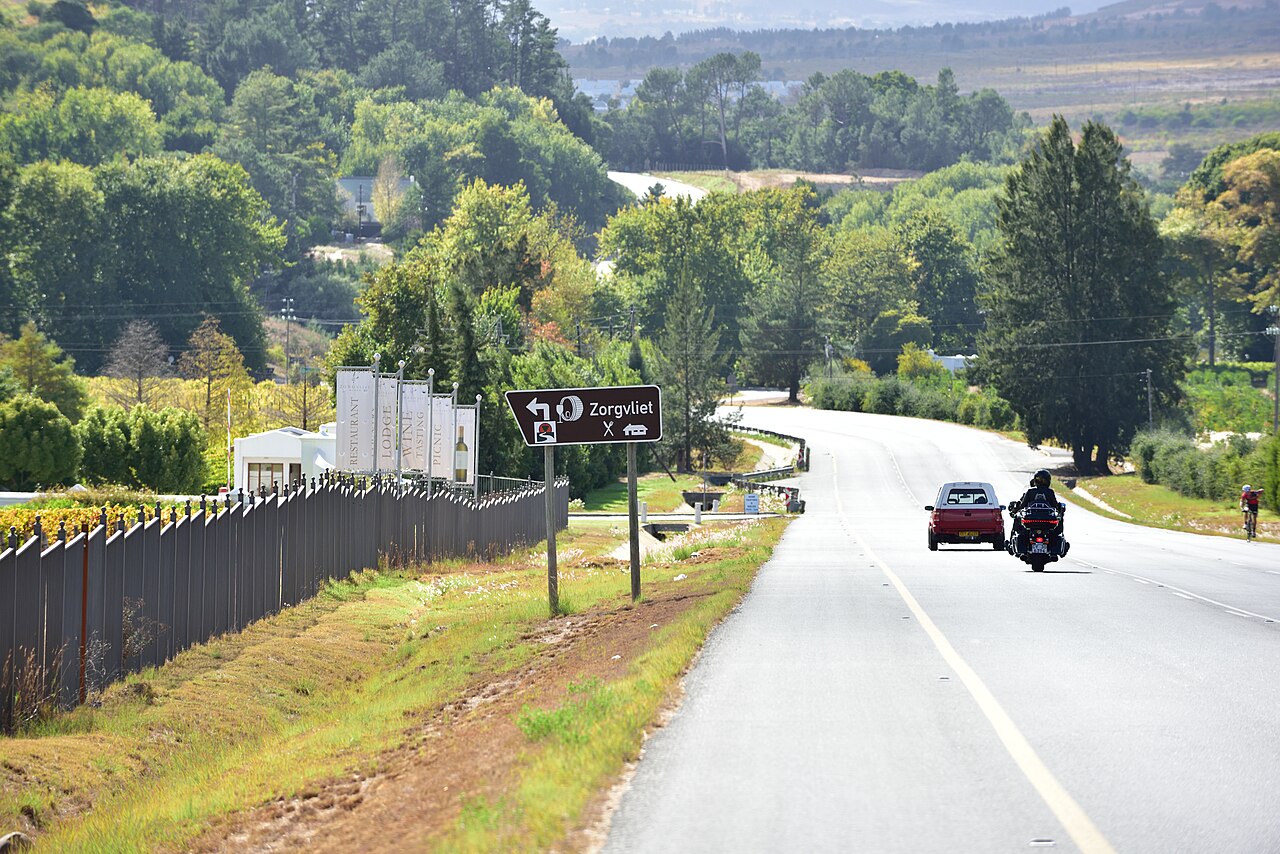
Getting there: The Winelands are a 40-minute drive from central Cape Town via the N1. You can self-drive (roads are excellent, signage is clear), hire a private driver for the day, or use the wine tram in Franschhoek and hop-on-hop-off shuttles in Stellenbosch.
Best time to go: October to April is ideal. Summer (December to February) is hot, dry and busy. Spring (September to November) brings wildflowers, green vines and comfortable temperatures. Autumn (April to May) is harvest season and the vineyards turn gold and crimson. Winter (June to August) is rainy but uncrowded and the restaurants run fireside menus.
Budget: Tastings typically cost R50 to R150 per estate (often refundable with a purchase). A good lunch for two with wine will run R400 to R800. A full day including transport, tastings and food for two people can be done for under R1,500 if you choose carefully.
What to wear: Smart casual. The Winelands are relaxed but these are still working farms and historic estates. Closed shoes are essential if you plan to walk the vineyards.
The Bigger Picture
The Cape Winelands represent something that most of Southern Africa’s marquee destinations cannot offer: a deep, layered cultural experience that combines landscape, history, food and world-class production in a single accessible day trip. You do not need a 4×4, a guide or a big budget. You need curiosity and a designated driver.
If you are planning a Southern Africa trip and you have allocated two weeks to Kruger, Victoria Falls and the Garden Route but zero days to the Winelands, reconsider. You are flying across the world to see one of the most remarkable wine regions on earth and driving straight past it.
Give it a day. You will not regret it.




The editorial team at Destination Southern Africa brings you the most comprehensive travel intelligence for Southern Africa. With decades of combined experience in African tourism, we cover everything from hidden gems to practical travel tips for international visitors.