

Fresh tracks press into the sand ahead. Deep, clear, impossible to miss. A ranger lifts a hand and the group stops at once. Silence takes over. No engine. No steel frame. No comfortable distance. Only the sound of footsteps, steady breathing, and the low tension that comes with being fully present in the bush.
In South Africa’s private reserves, guided rhino tracking on foot has become one of the most memorable ways to experience conservation. It draws travellers into the wild on different terms. This is not a game drive watched from a seat. It is an encounter shaped by patience, awareness, and respect.
Reading the Signs
The experience starts long before a rhino comes into view. Trackers read the ground with remarkable precision. A turned leaf. A scuff in the dust. Broken grass still fresh from recent movement. Years in the bush have taught them how to follow signs most people would miss entirely.
Guests walk in single file behind experienced rangers. The mood shifts as the trail sharpens. Voices soften. Movement slows. Every sound matters.
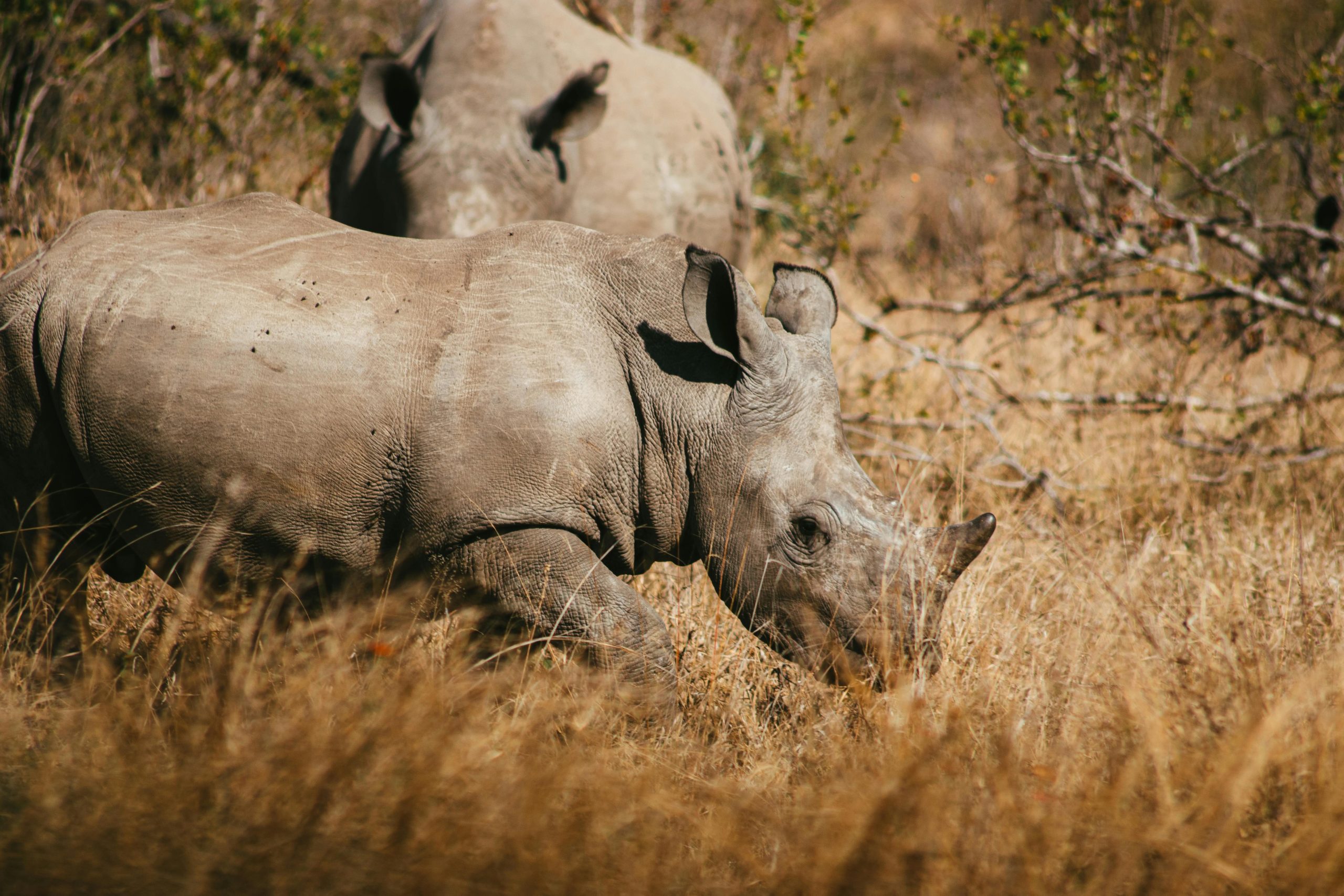
Then a rhino appears through the brush. Massive, calm, and completely real. A white rhino stands with quiet authority, ears flicking, alert to its surroundings but not disturbed. The distance is carefully managed, yet close enough for the moment to land with full force. Nothing shields you from the scale of it.
Conservation at Ground Level
Private reserves such as Sabi Sand Game Reserve and Phinda Private Game Reserve have shaped these walks with careful attention to safety and conservation. Groups are kept small. Rangers are highly trained. Encounters are managed with discipline and care, while still feeling completely natural.
What makes the experience even more powerful is its direct connection to protection efforts on the ground. Tourism income helps support anti-poaching units, monitoring systems, and local community programmes. A guest joining a walk is not only there to witness something extraordinary. That visit also helps fund the work required to keep rhinos alive and protected.
That understanding changes the tone of the experience. It gives the walk weight.
The Impact of Being Close
Seeing a rhino on foot alters your sense of scale. Their size is startling. Every breath and small movement carries presence. Standing near one brings a sharp awareness of both strength and fragility.
After the walk, the conversation often changes. Excitement gives way to reflection. Rangers speak honestly about poaching, habitat pressure, and the ongoing cost of keeping these animals safe. Guests leave with far more than photographs. They leave with a clearer sense of what conservation really demands.
A Travel Memory That Stays With You
Back at camp, the bush settles into evening again. Leaves shift in the breeze. A distant call carries through the fading light. The walk is over, but the feeling stays.
Tracking rhinos on foot offers a rare kind of travel memory. It is immediate, humbling, and deeply human. It places people close to one of Africa’s most iconic animals while revealing the reality of the work being done to protect them.
For travellers looking for depth and meaning, this is the kind of experience that stays with you. One quiet step at a time.




The editorial team at Destination Southern Africa brings you the most comprehensive travel intelligence for Southern Africa. With decades of combined experience in African tourism, we cover everything from hidden gems to practical travel tips for international visitors.